Thursday, July 21, 2016

So, What Am I Doing?

I want to take a quick break from travel writing to quickly explain what I am doing in Tanzania. As part of a placement through the Olin IDIN fund, I am working at Twende in Arusha, Tanzania for two months this summer. Twende is a social innovation center that works to empower local innovators to solve challenges they see in their communities. We work to accomplish this through hands-on workshops and projects. We also provide support for businesses and developing social ventures.


The workshop.

But enough about that, back to me. I am working primarily in the (2 person) design team. As the director of creativity (self-appointed title), I work to provide design support for both the Twende center itself, and for the innovators that are working on projects or businesses. I have recently been working on designing a book to highlight Twende’s CCB (Creative Capacity Building) workshop, as well as graphic design for a business operating out of Twende. Throughout it all, I have been documenting the various work that goes on at Twende through photo and video. On the more human-centered design side, I have been working on improving the workshop space, and planing for Nane Nane (a large festival that happens in the beginning of August).

A view inside.


It is safe to say that this summer experience has been unlike most. When deciding whether to take an opportunity more in my comfort zone or to come here, I took a leap of faith. It has paid off so much more than I could have hoped for. Not only am I working somewhere where I can have a real, meaningful impact on the lives of others, but I have also grown so much as a person and gotten to know myself much better. I would recommend everyone that can take this kind of opportunity whenever possible. It has been a wonderful learning experience so far, and it’s hard to believe I am more than half way done with my internship here already. There is so much more that I want to accomplish!

Friday, July 15, 2016

Tanzanian Style

Its noon and I am biking in the middle of the African desert with Han and Scotty and they both have flats. We are at least five miles from our camping site where, after some brief consideration this morning before we left, we have decided to leave the bike pump in the car. The dirt road is a fiery orange, and weaves through fields of dying sunflowers and tall yellow grass. Mt. Kilimanjaro soars up ahead of us, disappearing into the clouds.


Exploring the roads by bike.

Just moments ago, as I was leading us down a narrow path that swerved in and out of a dried-up river bed, I hit the brakes hard to maneuver around a fallen branch. I heard a muffled cracking noise behind be, followed by “Shit!”. I knew what this meant immediately. At the campsite this morning as we put together our bikes, Han was riding around when one of his handlebars suddenly snapped off. In addition to the engine failure and the missing quick-release bolt, this only added to our transportation trouble, not to mention the flat tire we would receive driving out the next day.


Not a bad camping spot.

We went in search of a fix, but in the remote campsite a wooden dowel was the best we could find. We cut up the dowel into foot-long pieces and made a make-shift splint for the handlebar, held together by tightly-wrapped bicycle tubes. Han goes for a test ride, and we decide that our fix will do. As we are leaving on the rocky, dusty road, we stop by Mwambo. He points at the bike, “Hey, I like the fix. Tanzanian style.”
One month in, and one month to go, I have finally embraced my new way of living. Cold showers, dust on pretty much everything, running to charge all of the electronics when the power goes back on. I sit in a cold plastic chair instinctively switching back and forth between windows on my computer waiting five minutes for a google search result to load. I also drink warm chai when the weather turns a little chilly, and wave back to all the children playing soccer as I go by them on my run.
We walk our disabled bikes down the road a bit further happen upon a small shop. With limited Swahili and lots of hand gestures, we get the tubes fixed. We strap our helmets back on and continue down the path. Right around the corner, we find ourselves biking through a rock quarry. The white granite provides a stark contrast against the red dirt. “Where are we?” we ask the man taking a break from chipping at the rock. “You’re in Kenya!” he replies. “We’re in Kenya!” I exclaim and we all give high-fives.

Made it to Kenya!

As the sun illuminates us from behind, we head back towards camp. Through small villages, fields of sunflowers, and tall waving grass we bike with our eyes trained on Kili. The next day we wake up, kayak across the deep, clear lake to Kenya on the other side, and hike with the baboons. When the weekend comes to an end, I am back at Twende, supporting local Tanzanians that are making a real difference in their communities. I could get used to Tanzanian style.

Wednesday, July 13, 2016

Great City of the South: Understanding the Urbanism in São Paulo


[This was originally a continuation of "Ola Sao Paulo!", divided into two posts for readability.]

In our conversations prior to my arrival in Brazil, Anielle Guedes, Urban3D's founder and CEO, described São Paulo as one of the "great cities of the South." These cities -- places like Lagos, Jakarta, New Delhi, Shanghai, and other rising cities across the "Developing World" -- have seen massive population expansions as people move from the countryside seeking economic and social advancement. While these locations have vastly different cultures and political traditions, all face similar challenges in providing services -- from modern transportation and finance to basics like public health and housing -- for their populaces. They also see, to varying degrees, large levels of inequality.

These realities are readily apparent on the streets here. São Paulo is South America's largest city, and has the greatest concentration of industry on the continent. While it was a relatively quiet center of cattle and coffee production at the turn of the 20th century, São Paulo has gone through several periods of great economic growth. Today, the State of Sao Paulo, home to 20% of Brazil's people, generates over 40% of the nation's GDP. Young, well-traveled Paulistanos that I've talked to often compare their city to Nova York: both cities share a strong business culture, a well-utilized metro system, and a large fleet of helicopters (NYC is #1, São Paulo is #2). And the cities are comparatively sized, with the São Paulo metro area's 21 million people in 7,000 sq. km corresponding closely to New York City's 23 million, though New York's metro is spread out over 34,000 sq. km. However, the urban form starts to diverge there. Population density and building types in New York City form a Gaussian curve centered on Manhattan (60-story offices and apartment buildings downtown give way to 6-story apartment blocks in the boroughs and 2-story houses in the suburbs), and the entire city is characterized by an effective grid system that anticipated future expansions. Different story for São Paulo.

São Paulo: Makes Boston look reasonable. 
Mappi.net. Original: http://www.mappi.net/sao_paulo.php
By contrast, the city planning here is more frenzied and less, uh, planned: from its origins as a hilltop Jesuit monastery in colonial times, the city today is a mix of old village centers, streetcar-oriented grids, grand avenues, office parks, highways, and improvised settlements which later had their streets paved and dignified. Its dense residential neighborhoods of two-story houses, host to working-class immigrants and well-to-do Paulistanos alike, established themselves on the former coffee plantations and hillsides one-by-one as the city expanded. Since the midcentury, and especially since the high-crime days of the 1980's, relaxed zoning laws have allowed 30-story apartment towers to sprout across these neighborhoods, providing the rich with a more modern, "American" standard of living complete with strong metal fences and protected basement garages for automobiles. The result of this indiscriminate construction: after riding 30 minutes on the metro from the historic downtown, your view of the skyline remains pretty much the same.
A patchwork of low-rise homes and high-rise apartments, the product of unrestricted and unplanned construction over the past few decades, sprawls out for hundreds of kilometers.
Ana Paula Hirana. Original: https://www.flickr.com/photos/33704098@N00/5746769466
For me, the essential lesson from this reality is that São Paulo, as a city, is difficult to rationalize. In its hugeness and density and sprawl, it is difficult (for me as a stranger) to imagine its entirety. Its streets don't naturally orient you, as New York's gridiron does; its hills are too crowded and too numerous to provide clarifying vistas, as they do in San Francisco, or to provide a backdrop as they do in Los Angeles; its skyline, in its consistency, offers few beacons to the urban navigator, as the Hancock Tower has always been to me in Boston. Even its rivers, the Pinheiros and Tiete, can't contain or define the city; rather, their concrete riverbeds merely provide the courses for the city's circumferential highway, literally called the Marginal, which separates the slightly-older neighborhoods from the slightly-newer sprawl.

Interestingly, this doesn't mean that São Paulo lacks a sense of place; rather, it seems to become a city of many, many places. The relaxed zoning means that some streets become disappointing strips of condo-tower garage ramps, but on other thoroughfares, neighborhood businesses have great freedom to improvise and thrive. The street art here is prolific and fantastic (notably Beco do Batman, but countless murals exist elsewhere). There are big places: Avenida Paulista, formerly home to the powerful coffee planters' mansions, now home to powerful industry leaders' office towers; the Stock Exchange and Financial District; the plaza of the Metropolitan Cathedral.The tangle of streets provide plenty of opportunities for the great civic monuments to bump up against local markets and shops, spray-painted high-rises, and cluttered back-alleys. In essence, the hugeness of the city, and its improvised planning, provide the kind of nooks and crannies essential for humans to settle in and define their own lives.

Of course, this is the outsider's perspective, based on my own observations and conversations with a few of the people I've met here. It's quite likely that a seasoned Paulistano would have a different conception than I would -- it would be interesting to ask how they've drawn up their mental maps.

And also, of course, the unplanned nature of the city means that social problems can be very difficult to solve. Most notably is the entrenched social stratification, along class and race lines, inherent in the layout of the neighborhoods. The central neighborhoods here, with easy metro access and plenty of cultural amenities, are overwhelmingly upper-class and white. The city's working class people are largely people of color originating from Brazil's impoverished Northeast, and are relegated to peripheral neighborhoods. They face long commutes (up to three hours in one direction) on bus lines to get to employment centers downtown, with public social services (healthcare, education, etc) that are "ridiculously underfunded," in the words of one of my housemates. This is further exacerbated by interpersonal discrimination and prejudice. Many of the people I've spoken to have said that social mobility is extremely difficult, and many of the same wealthy families have been running the country's institutions for generations. Sound familiar?

As the 21st century progresses, more and more people will be moving to cities like São Paulo. Urban planning in the 20th century, particularly in the United States, centralized its power in top-down urban renewal agencies. The sprawling metropolises of the 21st century may prove to simply be too gigantic, and will certainly prove to be too under-funded, to pursue that kind of erasure and demolition and resurrection. Much to the chagrin of the Baron von Haussmann's of the world, cities will likely need to live with their confusion and imperfection and un-idealism. Renovations and redesigns will still inevitably occur, but on a much smaller scale. However, these conditions may ultimately be an advantage. Could the reduction of central planning allow a shift in focus back to localization, to communities and neighborhoods? In other words, is it possible that, within the niches of the megacity, we could live at a more human scale? I would like to see this as a possibility, and imagine that modern life can become more, not less, alienating. Of course, the great challenge of this new urbanism will be ensuring that the people now on the periphery are not left behind. Can the people of privilege and power find new ways of bridging the gaps? Or will the amoebic cities of the future, having triumphed over history and trampled over geography, be increasingly defined only in terms of "inside" and "outside"?


Thanks for reading, sorry for the rambling! Do you have any thoughts about urbanism, or anything else? Leave a comment below!

Olá, São Paulo!

Olá! Tudo Bem? My name is Michael Costello, mechanical engineering student and member of the Olin College community of 2014. I'm spending the summer in São Paulo, Brazil, working with Urban3D, a start-up company which partially emerged from IDDS in 2012. Urban3D is working on creating new technology to supplement and automate the construction process, with the ultimate goal of producing low-cost, environmentally sustainable, community-oriented building to address the developing world's infrastructure needs. As a mechanical engineer with an intense interest in urban design and development, Urban3D has been a natural fit. I'll be spending the next few weeks working on the design and prototyping of Urban3D's mechanical systems. However, as part of my work, I am also learning about the city itself, so that the system we design will provide maximum positive effect for communities here. After spending twenty years in the city of Boston (metro population 4.6 million, metro area 11,700 sq km), the change from the familiar brownstone row-houses has shown me quite a bit about how cities react under intense human pressures, giving me a glimpse of the past and future of our rapidly-urbanizing world.

The view from my hostel's roof. Not shown in this photo: zoning laws.
I'm a week into my trip already, so I've had some chance to get acclimated to the work environment and the new city. There's been plenty to think about. Having never traveled outside the country -- hell, outside of Massachusetts -- on my own, there are lots of topics I hope to reflect on. Already, I've been wrestling with some interesting ideas: the meaning of "international development," the philosophy of automation, the future of architecture, the strategies of constructing adequate infrastructure and solving social stratification (I have no answers so far, just more questions)... not to mention the more terrestrial experiences of being immersed in a different culture, like food, friends, work, fun, and conversing in Portuguese while not really knowing how to speak Portuguese. And, ultimately, the experience of getting used to a "normal routine" that is drastically different from the one I've always known. It's been an interesting experience so far, and the next few weeks promise to be equally exciting!

Monday, July 11, 2016

A Few Rants From Bogota


As is often the case, the most interesting things this week have been conversations. Please bear in mind, that I mean this is often the case because new people can introduce new thoughts and ideas and carry around a lifetime of stories and experience. Many of my favorite conversations recently have been with my airbnb host’s mother. She seems to have taken a shining to me and enjoys teaching me parts of spanish I didn’t know, how to make the best hot chocolate of my life (sorry, mom), and even took me to the botanical garden (although I’m pretty sure this last is because she’s worried about me walking for hours up and down the city alone). I spent most of my last sunday walking with her through the botanical gardens which are phenomenal. They’re the closest I’ve been to a jungle since I was three in Costa Rica. While I had briefly discussed religion with Mao, my airbnb host, while visiting a church, this was a much longer conversation covering music, philosophy, politics, literature, sports, and American politics. She is a fervent Nirvana fan, likes Max Weber’s ideas, is neither conservative nor liberal, has read so many books it’s incredible, loves the colombian women’s soccer team, and has no idea how the U.S. could possibly elect Donald Trump. Our discussion of religion was enlightening as a glance at Colombia over the past three generations. Her parents were fervent Catholics. She, while educated by nuns in catholic school, said she was probably not catholic but was some type of christian. Mao, her son, told me he was a daoist (go figure). We even managed to go through what I like to call the grand inquisitor argument with no adverse effects*. I have found here that people are much more open to differing ideologies and especially to different political opinions. That being said, a lot of the art in the museums here make me want to start apologizing profusely for the U.S. foreign policy over the last fifty years (I’ve seen so many american dollar planes attacking people I’m starting to have dreams about it).  I also bring up Donald Trump because over the past two weeks I’ve had to explain my theory about how it’s possible he has risen to this much power more than 6 times...in spanish.


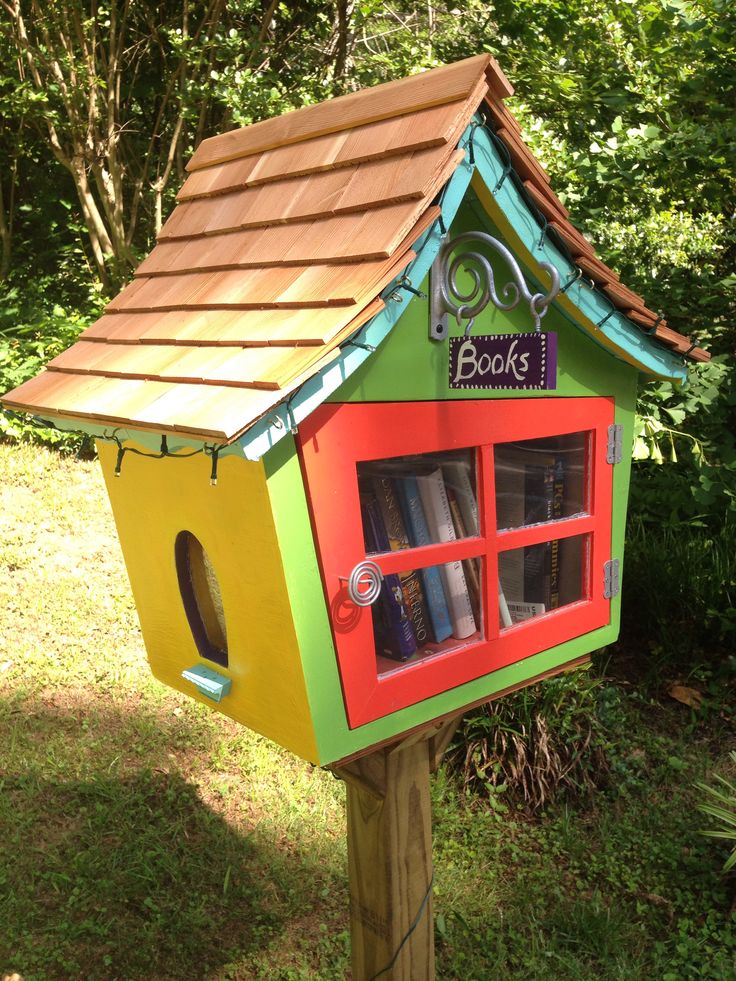
LittleFreeLibrary.jpgI’ve had a busy week. Since last week I’ve been to four museums, walked nearly twenty miles of city, went to Roque el parque 2016, went to the botanical garden, saw the house of the author of Aura (weirdest book I’ve ever read), decided what two workshops I’m going to run, and figured out what build it I will do. The function of C-innova is development for colombia, and the easiest way they’ve found to do that is through education and workshops (weird, education works…). The first workshop I will be running is on how to build the little community libraries. There are differing opinions on the functionality and benefits of these little libraries, but overall I feel that they’ll be a positive step for Colombia. People here love to share opinions and ideas so much and they would probably help brighten up the never ending fences and walls. The people here at C-innova also see them as a branding opportunity so that we can put our name out there more and attract people to other workshops that we have. The libraries are also very cheap because they can be made out of almost anything. In addition, these little free libraries may be a way to help bridge the education gap inherent in many school systems. Over the past few decades it has become apparent that while low income students learn just as much as middle and upper income students during the school year, over the summer they fall far behind (sorry, but maybe no summer vacation is the way to go...now that I’m safely through that time). In recent years this has been pinned on a lack of accessibility, and little free libraries may be a way to bridge this gap**.


Media-Based-Aquaponics-System.png
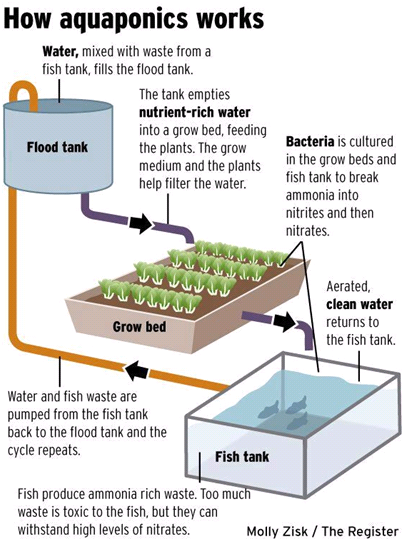
The second workshop that I’ll be doing involves aquaponic systems. Until about a year ago I was completely new to aquaponics, but then a friend invited me to join a club of people interested in building an aquaponic system. Since then I’ve become a huge proponent of the use of such systems. To put it mildly, the earth is on the edge of a huge food crisis, not always caused by simply not being able to grow enough, but sometimes caused by an inability to distribute what we do have (Seriously y’all, stop throwing away so much food). For evidence of this I recommend typing in Venezuelan food crisis into wikipedia and get ready to feel some bubbles of anger and frustration. In case you didn’t know, aquaponics systems allow for the growth year round of many times more vegetables and other plant life. These systems also allow for the cultivation of fish which use less food to become protein sources than any other animal. In addition to this fact, it is predicted that most of the population growth over the next few decades will be in developing countries, including Colombia. What many of us (meaning those who are worried about the global food trend) are hoping to do, is help countries like Colombia leapfrog over the past couple of decades of inefficient and polluting agriculture that we had in the U.S. and move straight to this sort of agriculture that allows for low transport distances, one tenth as much water for a greater quantity of crops, and a healthy efficient protein source that’s not dumping CO2 and methane into the atmosphere***. Also, it would be great if this technology could find its way across the border to Venezuela. The closest thing to this system I’ve seen here is a hydroponics system in the Botanical Garden.
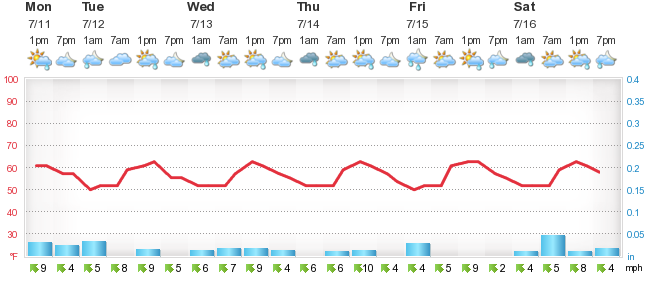
After a brief dalliance where I decided to see if I could break chemistry in order to build a cheap electrodialysis system (still want to see if I can do this), the group and I have voted on making a crank generator capable of charging cellphones and other USB powered devices. While C-innova here made solar chargers only a few weeks ago, they quickly realized that this system doesn’t work in Bogota, mostly because I’ve only seen the sun once or twice since I’ve been here. weather.png
The other idea is to do this at a much lower cost and with a greater degree of customizability. Basically, I will make the circuit and a diagram of how one would make that circuit themselves and how to connect it to a hand crank, or a bike, or whatever suits the fancy of those who want to use it. It hasn’t been terribly easy because a lot of the components and items I take for granted in the U.S. have to be shipped here, usually from the U.S. or China. I’ll also draw up a couple of fun educational circuits that these guys can use when I’m not around, small Van Der Graaf generators and little games to teach circuit logic. Maybe we could make a sort of obstacle course out logic gates? I’ll have to think about it. In any case, it’s nice to have an objective and a course to pursue. For further rants about the state of agriculture and bizarre political opinions, tune in next week to Maddy has a headache from trying to learn as much spanish as possible over only a few weeks and has a tongue that seems to no longer be able to form syllables.

*I nicknamed this argument after the section titled, “The Grand Inquisitor” in “The Brother’s Karamazov.” Somehow it is held up as one of the best arguments against religion even while the entire book is held up as one of the greatest arguments for religion. It’s worth reading.

**One Example This is just one article on one idea on a very complex subject, but it is far from the only one with this belief.

***For further information I recommend google or this fantastic book: ”Aquaponic Gardening: A Step-By-Step Guide to Raising Vegetables and Fish Together”, by Sylvia Bernstein

Expression in Colombia

20160629_090218.jpg
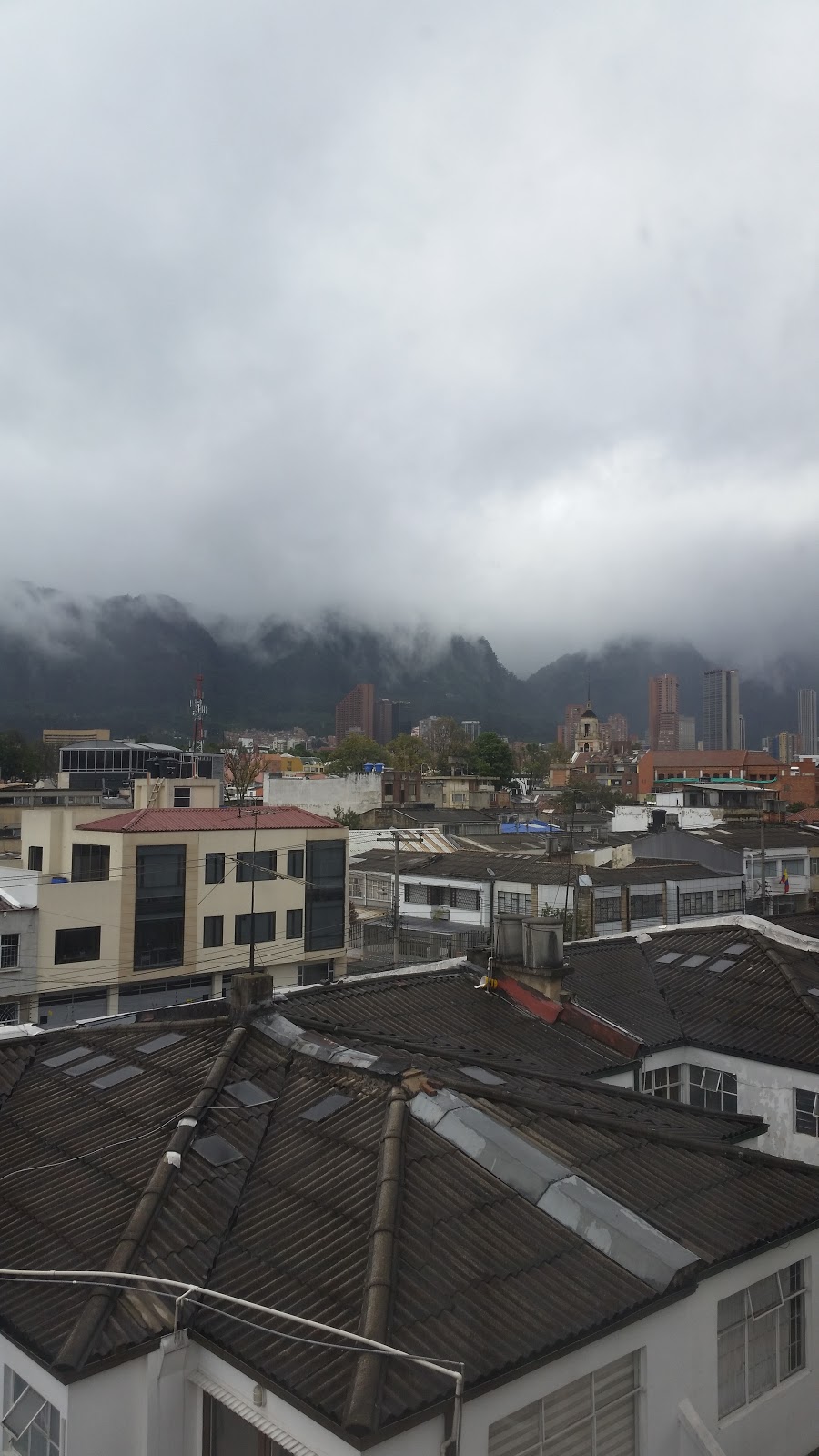
Colombia is not what I expected. I suppose I had expected some fusion of Mexico, Spain, and Costa Rica; the three spanish speaking countries I’ve travelled to before now. When I first arrived here, I was far too exhausted to notice anything and just barely managed to squeak out enough words in spanish to get through customs and into a taxi with the host of my airbnb (thank you, modern world).  After being handed six keys to get in or out of my apartment, I collapsed for a night’s sleep.  What greeted me the next morning was a sight of beautiful mountains and apartments leading up into the hills. I was a little taken back as I had expected it to look somewhat more refined, more like the careful masonry of Spain or the parts of northern Mexico I used to frequent when I was much younger.
What really shocked me was the razor wire. My exceptionally kind host escorted me around the city and I tried not to stare at pieces of trash, high steel fences surrounding all the apartments, and graffiti everywhere I could see. While I realize that the broken window theory is mostly debunked at this point, it is still exceptionally unnerving. To add to all this, while I speak spanish fairly well with a single person and can read it, the conversations that were whirling around me were far too much to keep up with. I felt surrounded by a foreign world and began to ask myself what I had gotten into, I mean I wanted to help people, but this was a pretty crazy place to live alone.
I’m not alone per say, as I’m sharing an apartment with my host and his mother. But between them they do not speak much English and it can be exhausting to constantly try to think and converse in another language. My host, Mao, is very amiable and swings by my little room asking if I need anything or want to go with him to get coffee. His mother even gave me an impromptu geography and history lesson about Colombia which nearly blew my socks off. I consider myself fairly educated for an American and I still had managed to forget that Brazil and Colombia share a border. Stupid Mercator projection making me forget just how huge South America is.
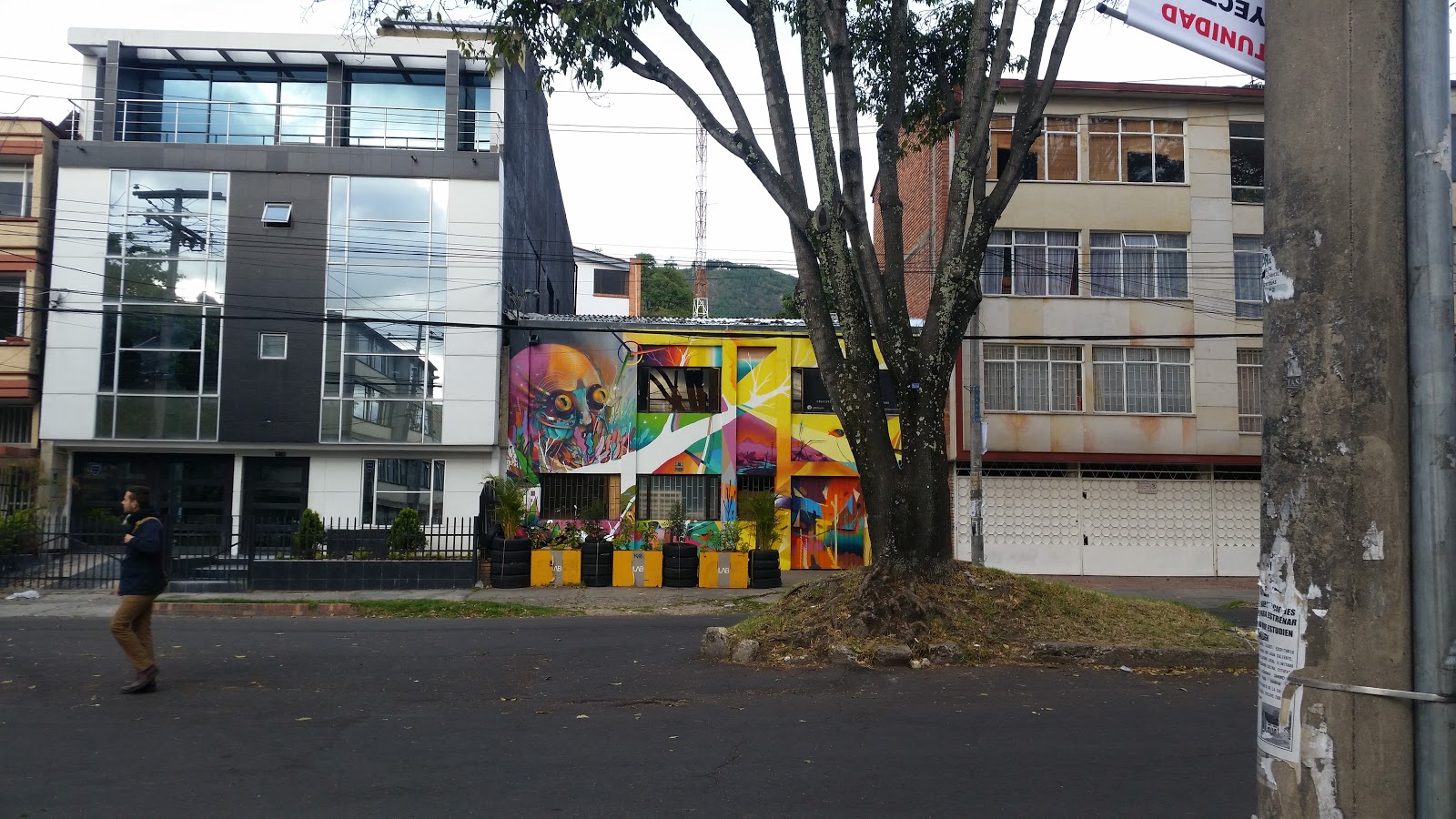
I got to meet the people that I will be working with for the next six weeks on my first day in Colombia. After walking past huge fences and lots of razor wire (still shocks me a little), I finally stumbled upon the building. The group I’m working with, C-innova, share a space called Lab1 which is squished in between several stores and apartment buildings. It stands out to put it mildly.


20160630_172214.jpg
C-innova and Lab1
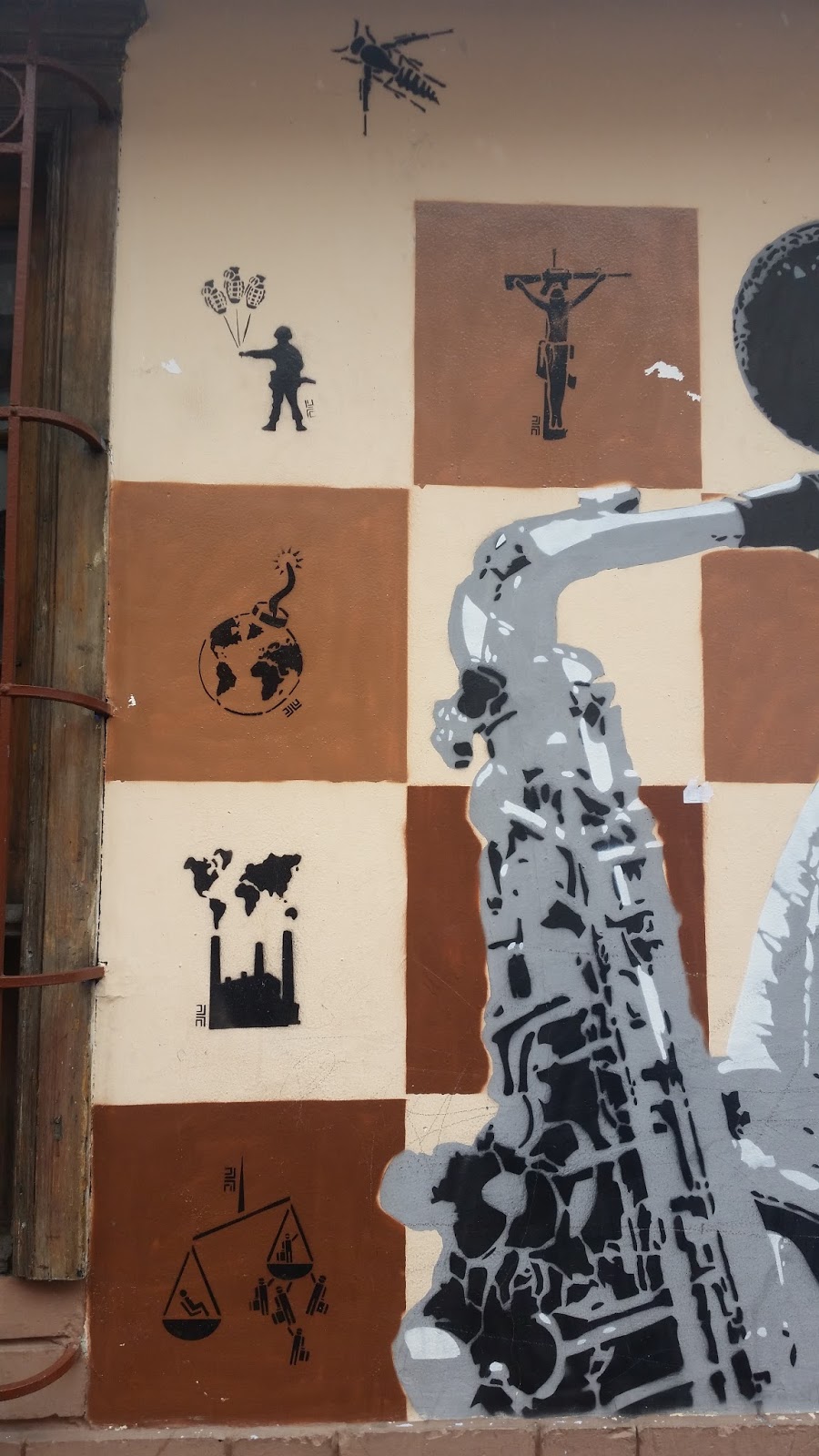
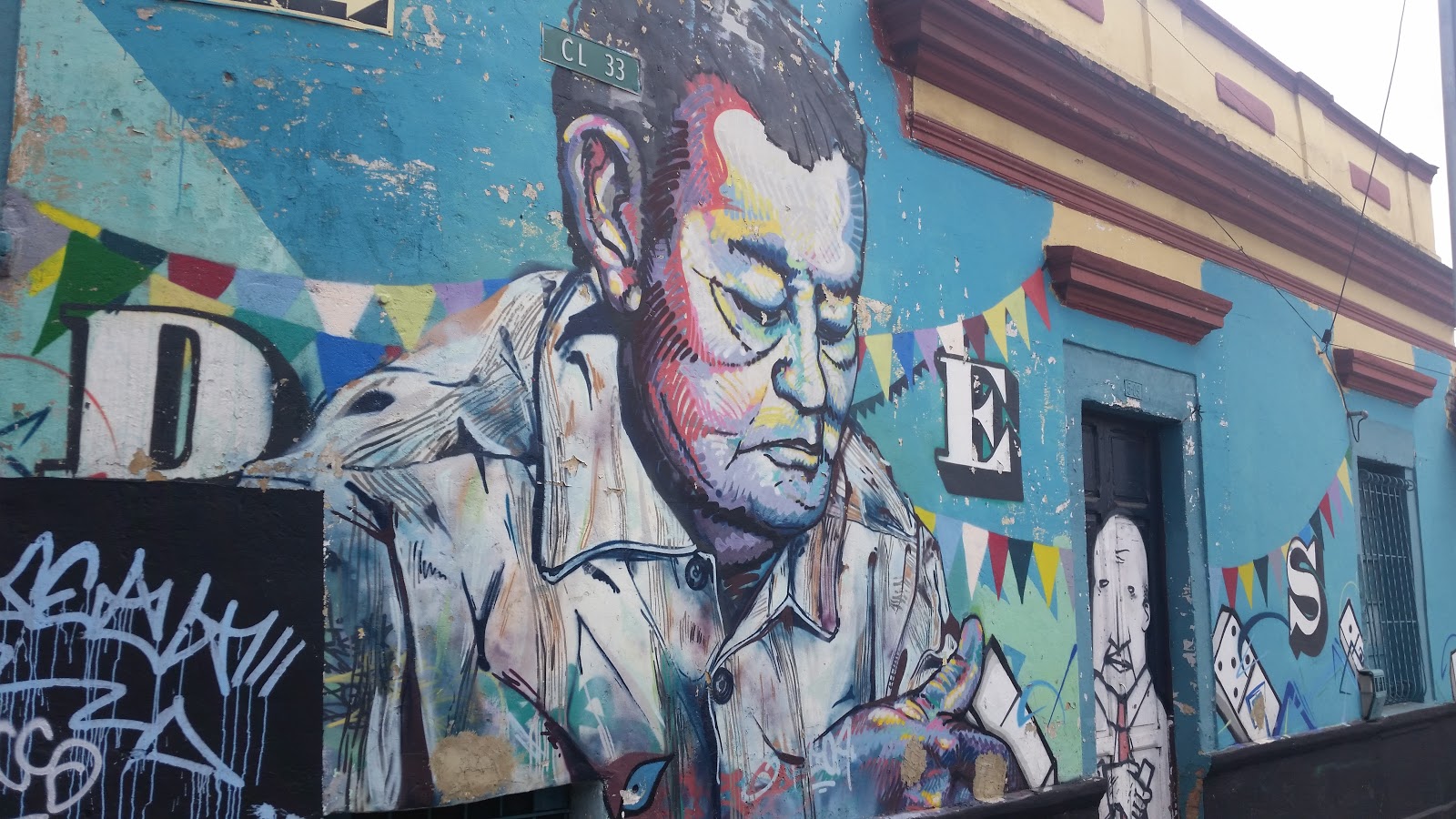
Yes, the yellow building here is Lab1. During lunch one day I asked one of my hosts (coworkers?),Johanna, what the fences and graffiti were about since I found them so surprising. The fences were because there was a specific type of robber who specializes in apartments and if there is an easy means of egress or ingress then the apartment or building is a prime target (hence my six keys to get to my room). The graffiti however was nothing to worry over since rather than a person or group staking territory, it was more of a form of self expression. At first, I didn’t really understand this idea.  I decided it would be fun to walk to the National Museum of Colombia, especially since the first Saturday of the month was free. On my walk I saw some truly stunning graffiti, telling stories, announcements (including one for a movie), and opinions.
20160702_153632.jpg
Man playing dominoes in La Candeleria
After having spent most of my last few days barely speaking for fear of messing up, I began to understand the incredible quantity of graffiti. When you’re forced to close your doors, add razor wire or broken glass to the tops of your walls and cannot afford nor care to appear too wealthy, street art makes sense. Expression is something that humans crave and Bogota has found its calling. There are even tours for just the graffiti which are, of course, conducted in English.
When I was back in Dallas, I was forced onto the skytran along with a few other unwilling passengers (I mean, what’s so wrong with wanting to take a walk?!). I heard a couple of people speaking spanish. I wondered if they felt ostracized and after working up my courage asked them in spanish where they were headed and if they had watched the Copa America tournament. They exuded joy it seemed at not being so isolated in a country where we are being told by certain groups to despise foreignness, and especially that they could just speak.
We talked about the various performances and lamented about the rumours that Messi would no longer play for Argentina (please Messi, don’t do this...you bring joy to the world by playing as marvelously as you do). We wished each other good luck to our various destinations, them to San Salvador and me to Bogota. Filled with a good will for humanity I watched a stranger’s bags while she went to the bathroom regardless of the loudspeaker blaring that I shouldn’t. I was rebelling in a place that forced me to remove almost everything I was using as expression and stand nearly naked whenever called upon to do so, a place where I had to walk where told and sit like a good puppy and not say the wrong words or act outside the norm.

So if I lived in Colombia, I’d probably cover my overly large walls and gates with beautiful paint as well. I admired that they didn’t have perfectly manicured lawns leading to the exact same house with the exact same cars and the exact same suits walking out each morning at exactly the same time. We all need a way to express ourselves, and street art like this, seems like a great way to do so. My Costa Rican friends would say “Pura Vida” about the art which roughly translates to "pure life" but really means "cool"(What a fantastic expression!). The Colombians would say “Es Chevere.” Hasta la proxima semana chicos.

Monday, July 4, 2016

Representing Twende in Dar es Salaam

Twende workshop is located in Arusha, Tanzania. It’s our office, shop, and showroom, and home base—our only location. In addition to travelling out to more rural areas, we occasionally travel to advertise Twende and meet like-minded people. And that’s how I ended up spending a week in Dar es Salaam, Tanzania’s industrial capitol and largest city.

I spent the first half of the week in a USAID “co-creation workshop” about improving adolescent girls’ education in Tanzania and Malawi. The idea was to bring together a bunch of organizations addressing girls’ education from different angles and put them to work together to come up with unique, holistic ways to improve enrollment and retention in schools. Twende was definitely one of the smallest—if not the smallest—organizations there. But I think we did have a unique perspective from being more on-the-ground and community-focused than some larger organizations. The workshop itself was interesting. We were told this whole collaboration ideation thing is a new method USAID is trying. It was all very “design” in a way that I think Oliners are used to—lots of butcher paper and Post-it notes.


I spent the second half of my week at a conference on Tanzanian startups. This one was very much aimed at young entrepreneurs. I’m not sure how to describe it except that it looked like a startup conference pretty much anywhere else in the world. I met lots of young people who were just overall very excited about the idea of starting their own businesses. There, I spent a lot of time talking about Twende, and I realized just how different we are in the field of startup incubators, innovation hubs, or whatever you want to call them, in the area. Unlike these others, Twende focuses on mechanical innovations, and many people (at both conferences) told me they knew great resources for business, web design, and coding support but nothing for mechanical innovators. The most common comments I received about Twende were: “Why are you only in Arusha?” and “Everybody should know about this.”